

Aircraft Illustrated Parts Catalog (IPC) | A&P Exam Prep
Prepare Smart, Study Strong, Pass with Confidence
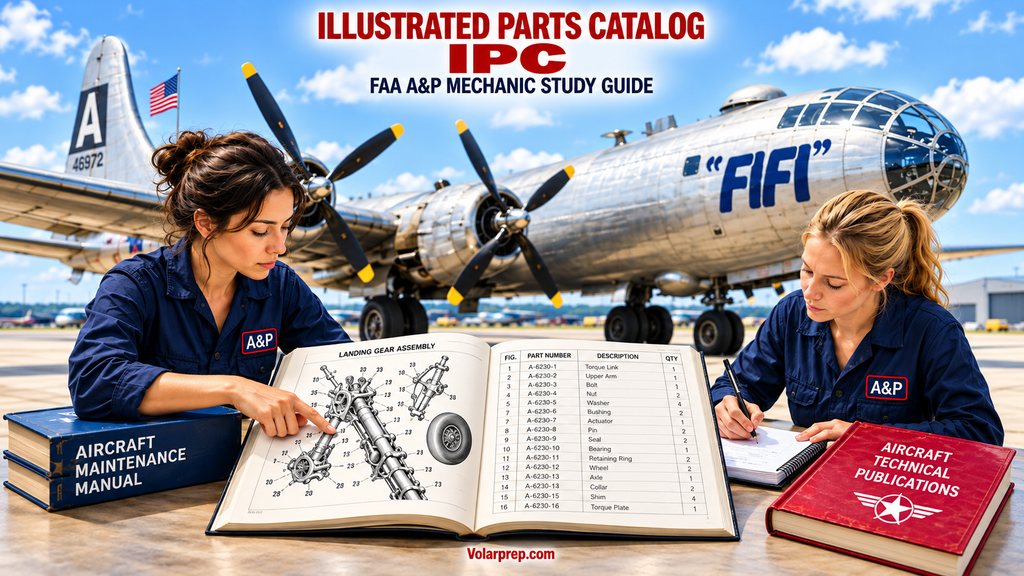
An Illustrated Parts Catalog (IPC) is one of the most important technical publications used in aircraft maintenance. Aircraft maintenance technicians use an IPC to identify aircraft parts, determine aircraft part numbers, understand component locations, and see how individual parts fit together within an aircraft assembly.
For students preparing for the FAA A&P mechanic exams, understanding how an Illustrated Parts Catalog works is an important part of learning to use aircraft maintenance publications correctly. Learn how an Illustrated Parts Catalog (IPC) is used to identify aircraft parts, part numbers, assemblies, and effectivity. Prepare for your FAA A&P exams with Volarprep.com
At VolarPrep.com, we help future aviation maintenance technicians prepare for the FAA General, Airframe, and Powerplant knowledge exams with focused study materials and practice questions.
What Is an Illustrated Parts Catalog (IPC)?
An Illustrated Parts Catalog, commonly called an IPC, is an aircraft technical publication that provides illustrated breakdowns of aircraft assemblies and the parts that make up those assemblies.
Rather than relying only on written descriptions, an aircraft IPC normally combines detailed illustrations with an aircraft parts catalog and corresponding parts lists. This allows an aircraft mechanic to locate a component visually and then identify information associated with that component.
Depending on the aircraft and manufacturer, an IPC may contain information such as:
- Part names
- Part numbers
- Item or figure numbers
- Component illustrations
- Assembly relationships
- Quantity information
- Effectivity information
- Alternate or superseded parts
- Installation location information
- Notes concerning particular configurations
The IPC is especially useful when a technician knows where a part is located but needs to determine exactly what the part is.
What Is the Purpose of an Aircraft IPC?
The primary purpose of an aircraft IPC is parts identification.
Imagine that an aviation maintenance technician removes an access panel and discovers a damaged bracket. The mechanic may recognize the bracket and know its function but still need the manufacturer’s correct part number.
The Illustrated Parts Catalog can help identify that component.
A technician can locate the appropriate aircraft system or assembly in the IPC, find the component in the illustration, identify its item number, and then locate the corresponding information in the accompanying aviation parts catalog.
This makes the IPC an extremely useful resource during aircraft maintenance and parts ordering.
How Does an Illustrated Parts Catalog Work?
Most Illustrated Parts Catalogs organize information into sections corresponding to aircraft systems, assemblies, or components.
A typical IPC page may contain two major elements:
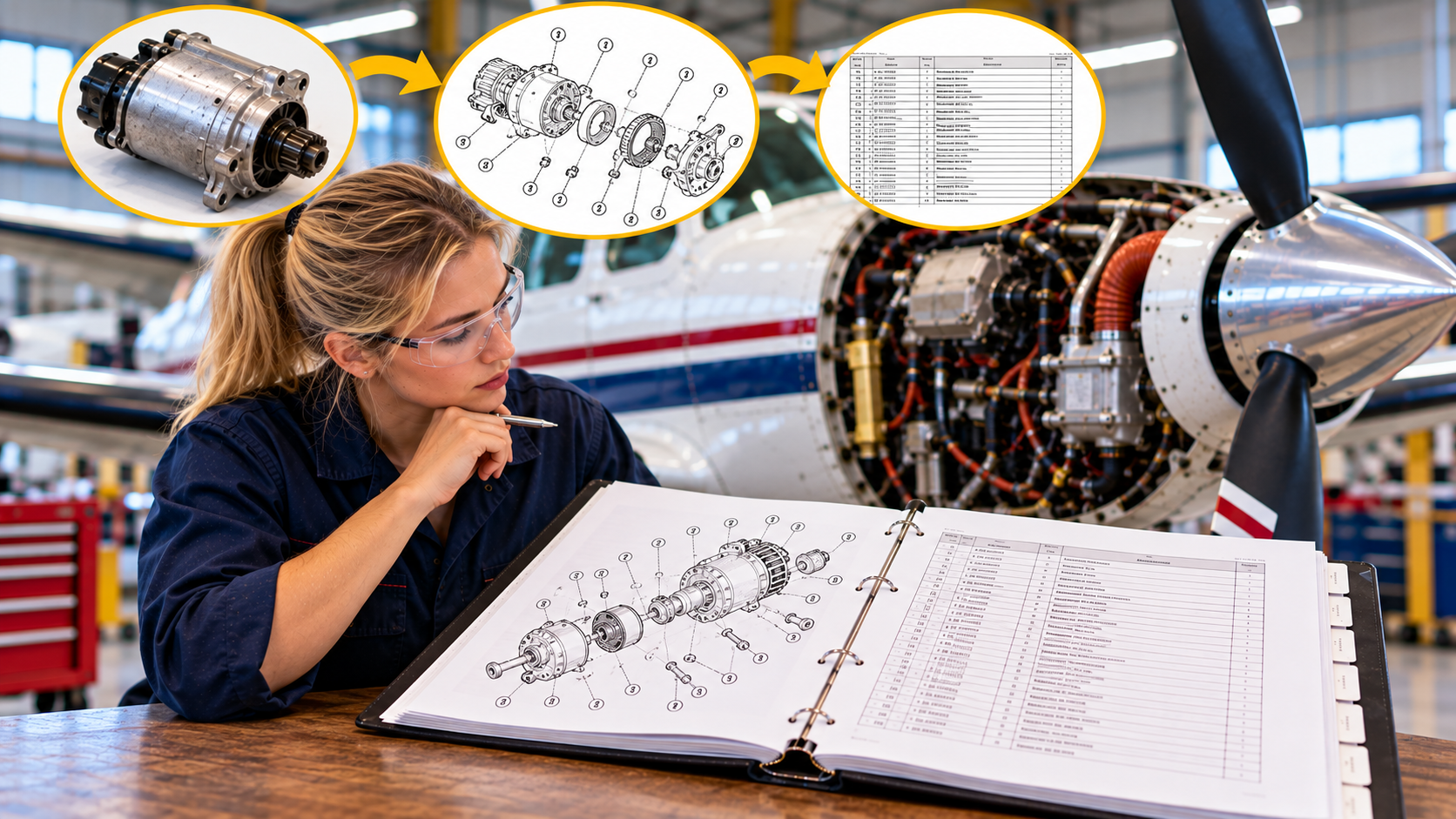
1. An exploded illustration
The illustration shows the relationship between individual components within an assembly.
2. A corresponding parts list
The parts list identifies the items shown in the illustration.
For example, an illustration of a landing gear assembly might show the wheel, axle, bearings, washers, nuts, bolts, brackets, and related hardware.
Each component may have an item number.
The technician then matches that item number to the parts list to determine the appropriate part number and description.
Understanding Exploded-View Illustrations
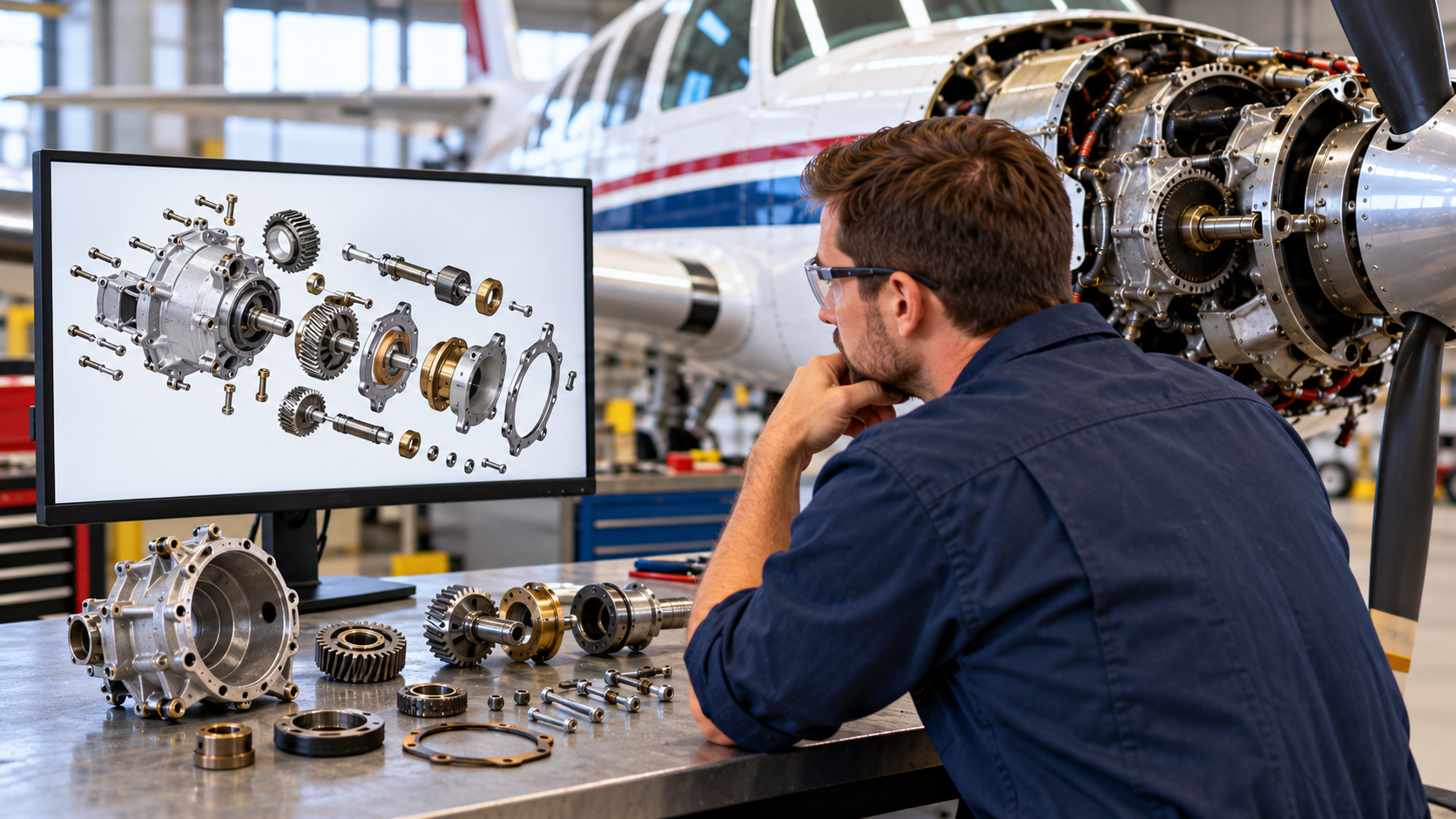
One of the most recognizable features of an Illustrated Parts Catalog is the exploded-view drawing.
An exploded view separates the components of an assembly visually while maintaining their approximate relationship to one another.
This helps an aircraft mechanic understand:
- Which components belong to an assembly
- Where components are located
- How components relate to surrounding parts
- Which item number corresponds to a particular component
However, an important distinction must be understood:
An IPC illustration should not automatically be treated as maintenance instructions.
The purpose of an IPC is primarily to identify parts.
When performing maintenance, technicians must use the appropriate manufacturer’s approved or acceptable aircraft maintenance manual information and follow the procedures applicable to the aircraft and task.
IPC Part Numbers
One of the most common reasons technicians use an IPC is to locate an aircraft part number.
Part numbers are critical in aviation maintenance because two components that look nearly identical may have different specifications, applications, or aircraft effectivity.
A mechanic should never assume that a replacement component is correct simply because it looks like the removed component.
Mechanics must consult the appropriate technical information.
The IPC can help technicians determine which part number applies to a particular aircraft configuration.
What Does Effectivity Mean in an IPC?
Effectivity identifies which aircraft, serial numbers, models, or configurations a particular part or illustration applies to.
This is extremely important.
Aircraft of the same general model may have differences caused by:
- Production changes
- Serial-number ranges
- Optional equipment
- Aircraft modifications
- Service bulletins
- Configuration changes
Therefore, finding a part number in an IPC does not necessarily mean that the part applies to every aircraft of that model.
A technician must verify the applicable effectivity information.
IPC vs. Aircraft Maintenance Manual
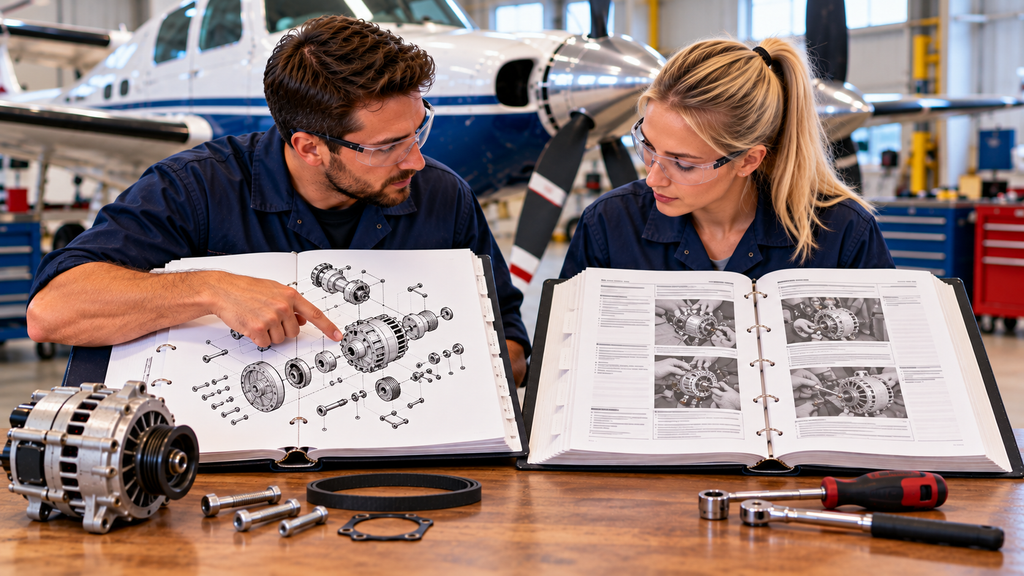
Students sometimes confuse an Illustrated Parts Catalog (IPC) with an Aircraft Maintenance Manual (AMM).
They serve different purposes and are separate aircraft maintenance publications.
Illustrated Parts Catalog (IPC)
The IPC is primarily used to:
- Identify parts
- Locate part numbers
- View component relationships
- Determine applicable parts
- Review assembly illustrations
Aircraft Maintenance Manual (AMM)
The Aircraft Maintenance Manual is primarily used to obtain maintenance procedures and instructions for servicing, inspecting, removing, installing, adjusting, testing, and maintaining aircraft systems and components.
An easy way for an A&P student to remember the difference is:
IPC = What is the part?
AMM = How do I perform the maintenance?
Understanding that difference is important when learning how aircraft technical publications are used.
IPC vs. Wiring Diagram Manual
A Wiring Diagram Manual (WDM) serves another purpose.
While an IPC identifies aircraft parts, a wiring diagram helps technicians understand electrical circuits and connections.
A wiring diagram may show:
- Electrical components
- Wiring connections
- Connectors
- Circuit relationships
- Ground points
- Power sources
For troubleshooting an electrical circuit, you may need the appropriate wiring information.
For identifying a replaceable component and its part number, the IPC may be the appropriate reference.
IPC vs. Structural Repair Manual
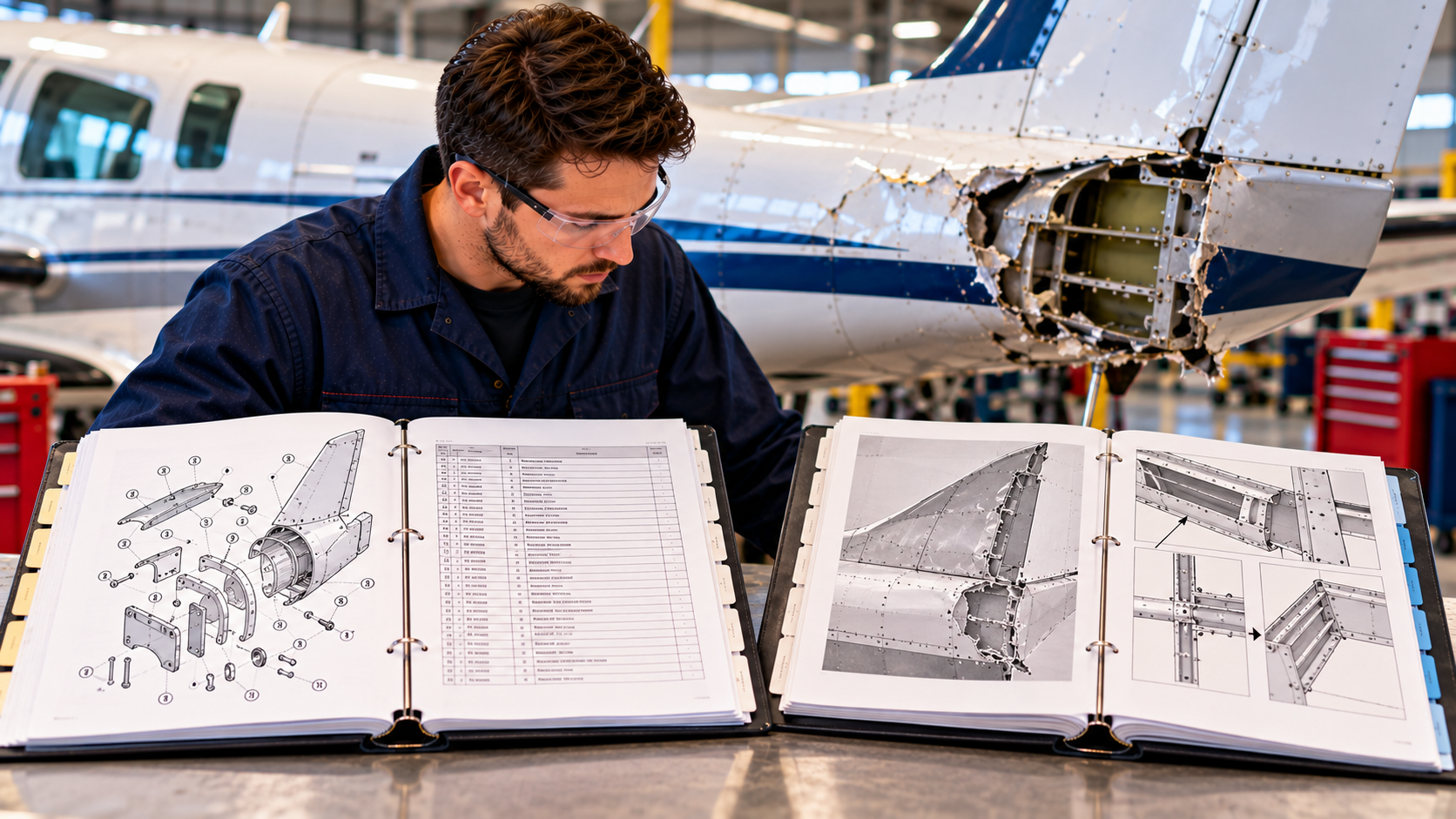
The Structural Repair Manual (SRM) provides information concerning aircraft structural damage and approved repair limits or procedures applicable to the aircraft.
By comparison, the IPC is primarily a parts-identification publication.
A technician dealing with structural damage should not substitute an IPC illustration for the appropriate structural repair information.
Knowing which technical publication to use is an important skill for every aircraft maintenance technician.
Why IPC Knowledge Matters for A&P Mechanics
A&P mechanics work in an industry where accurate technical information is essential.
Aircraft contain thousands of individual components. Similar-looking parts can have different applications, materials, strengths, dimensions, or specifications.
Using the correct technical publication reduces the chance of installing an incorrect component.
Understanding the IPC also makes technicians more efficient when communicating with:
- Parts departments
- Maintenance control
- Supervisors
- Inspectors
- Other technicians
- Aircraft manufacturers
- Repair facilities
Instead of saying, “I need that bracket near the landing gear,” a technician can identify the appropriate component and part number using the aircraft’s technical information.
How an A&P Mechanic Might Use an IPC
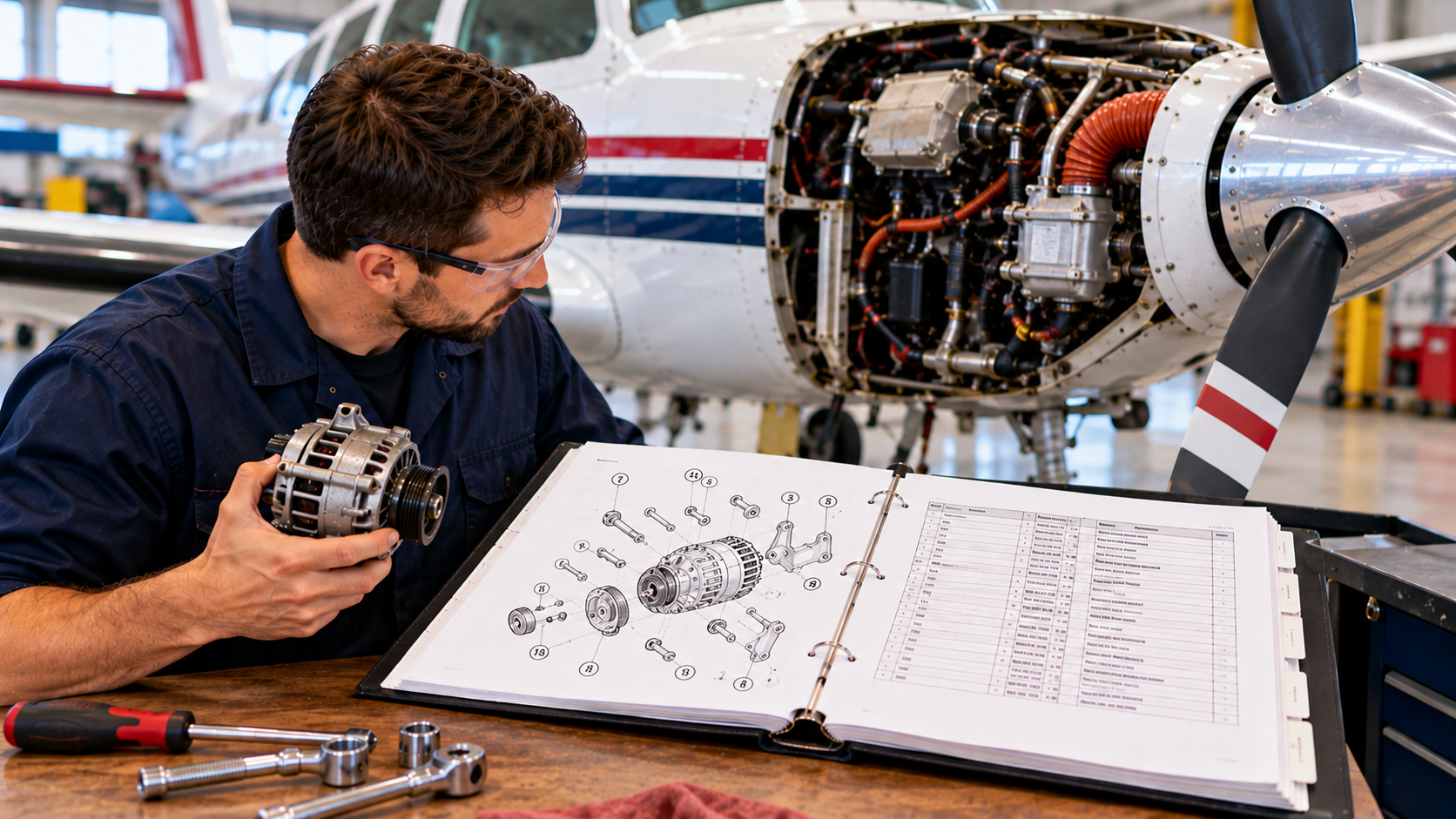
Consider a technician inspecting an aircraft and discovering a damaged component.
A typical information-gathering process might include:
Step 1 – Identify the aircraft
Verify the aircraft model, serial number, and configuration.
Step 2 – Identify the system or assembly
Determine which aircraft system contains the component.
Step 3 – Locate the appropriate IPC section
Navigate to the applicable chapter, figure, or assembly.
Step 4 – Find the component in the illustration
Locate the component and determine its item number.
Step 5 – Match the item number to the parts list
Use the item number to locate the corresponding part information.
Step 6 – Check effectivity
Verify that the identified part applies to the specific aircraft.
Step 7 – Verify current technical information
Confirm that the information being used is current and appropriate before proceeding with maintenance or parts ordering.
This demonstrates why technicians need more than the ability to memorize definitions. They need to understand how aviation maintenance information is organized and used.
ATA Chapters and Aircraft Technical Publications
Many transport-category aircraft technical publications use the ATA chapter numbering system to organize aircraft systems.
Examples commonly encountered include:
- ATA 21 – Air Conditioning
- ATA 24 – Electrical Power
- ATA 27 – Flight Controls
- ATA 28 – Fuel
- ATA 29 – Hydraulic Power
- ATA 32 – Landing Gear
- ATA 49 – Airborne Auxiliary Power
- ATA 52 – Doors
Learning how aircraft information is organized can make navigating technical publications much faster.
For example, if a technician needs information about a landing gear component, knowing that landing gear information is commonly associated with ATA Chapter 32 provides a logical place to begin searching.
Why Technical Publications Matter on the FAA A&P Exams
FAA A&P applicants are expected to understand aircraft maintenance information, documentation, drawings, publications, and proper maintenance practices.
Questions may test whether you understand the purpose of different technical publications rather than simply whether you can recognize their names.
For example, you should understand the difference between publications used for:
- Parts identification
- Maintenance procedures
- Structural repairs
- Electrical troubleshooting
- Aircraft inspections
- Manufacturer instructions
- Regulatory information
Knowing the purpose of each source helps you determine where to look for the information needed to perform a maintenance task correctly.
Don’t Just Memorize IPC Definitions
A common study mistake is memorizing:
“IPC means Illustrated Parts Catalog.”
That is only the beginning.
For FAA A&P mechanic test prep, make sure you also understand:
- Why an IPC is used
- How illustrated parts breakdowns work
- How item numbers correspond with parts lists
- Why part numbers matter
- Why effectivity must be checked
- How an IPC differs from an AMM
- Why an IPC should not replace maintenance instructions
- How technical publications relate to actual aircraft maintenance
Understanding these concepts makes related FAA questions much easier to analyze.
Study Illustrated Parts Catalog Questions with VolarPrep
Preparing for an FAA mechanic knowledge exam requires studying many subjects, including aircraft technical publications, drawings, maintenance procedures, regulations, aircraft systems, materials, tools, and inspection practices.
VolarPrep.com helps A&P students strengthen their understanding through focused FAA Airframe exam prep and practice.
Instead of waiting until test day to discover which subjects need more work, practice questions can help identify weak areas while you still have time to study them.
View FAA A&P Study Options at VolarPrep.com
Prepare for the FAA General, Airframe, and Powerplant Exams
The Illustrated Parts Catalog is only one part of the knowledge required to become an FAA-certificated aviation maintenance technician.
Depending on the certificate and ratings you are pursuing, your preparation may include subjects involving:
- Maintenance publications
- Aircraft drawings
- Weight and balance
- Mathematics
- Physics
- Electricity
- Materials and processes
- Aircraft structures
- Hydraulic and pneumatic systems
- Landing gear systems
- Aircraft electrical systems
- Reciprocating engines
- Turbine engines
- Engine electrical systems
- Fuel and metering systems
- Inspection procedures
- FAA regulations
The key is to study consistently and understand the principles behind the questions.
Ready to Prepare for Your FAA A&P Exams?
Build your knowledge before test day with FAA A&P exam preparation from VolarPrep.com.
Study smarter. Practice more. Prepare with confidence.
Start Studying with VolarPrep.com
Illustrated Parts Catalog (IPC) FAQ
What does IPC stand for in aviation?
IPC stands for Illustrated Parts Catalog. It is a technical publication used to identify aircraft parts and assemblies through illustrations and corresponding parts information.
What is an IPC used for in aircraft maintenance?
An IPC is primarily used to identify aircraft components, locate part numbers, review assemblies, and determine which parts may apply to a particular aircraft configuration.
Does an IPC provide aircraft maintenance procedures?
The IPC is primarily intended for parts identification. Obtain maintenance procedures from the appropriate maintenance instructions and technical data applicable to the aircraft and task.
What is an exploded-view drawing?
An exploded-view drawing shows the individual components of an assembly separated visually so technicians can identify the parts and understand their relationship within the assembly.
Why is aircraft effectivity important?
Effectivity helps determine whether a particular part, illustration, or configuration applies to the specific aircraft model, serial number, or configuration being maintained.
What is the difference between an IPC and an AMM?
An IPC identifies parts and part numbers, while an Aircraft Maintenance Manual (AMM) provides maintenance procedures and instructions. Technicians frequently use both publications, but they serve different purposes.
Should A&P students understand Illustrated Parts Catalogs?
Yes. Future A&P mechanics should understand the purpose and basic use of aircraft technical publications, including Illustrated Parts Catalogs, as part of developing the knowledge needed for aircraft maintenance and FAA mechanic testing.
Where can I practice for the FAA A&P exams?
VolarPrep provides FAA A&P mechanic exam prep and practice materials for students preparing for aviation maintenance testing.
Visit VolarPrep.com and Start Studying
These free Volarprep.com pages are designed as reference and subject-review material. Use them alongside your FAA textbooks and handbooks for detailed technical study. Then use Volarprep.com FAA A&P practice tests to apply what you have learned to FAA-style questions, review detailed answer explanations, and identify subjects that need additional study.